
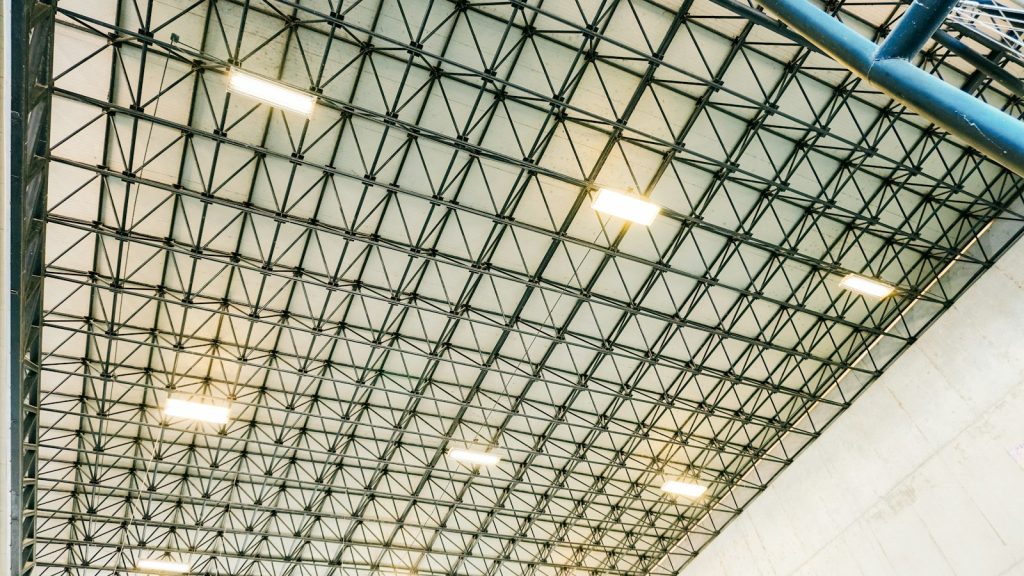
Dust on the overhead steel builds up for years before anyone looks up. Then it comes down: onto product, into the sprinkler heads and onto a clean floor. High dusting takes it off at the source and collects it, rather than moving it somewhere else.
What we clean overhead
- Roof joists, beams and purlins
- Conduit, cable trays and sprinkler pipework
- HVAC diffusers, returns and unit heaters
- High-bay light fixtures
- Tops of racking and ledges that the floor crew cannot reach
How we do it
We work from scissor and boom lifts for anything above 25 ft, with a spotter and a site-specific job hazard analysis before the first shift. Dust is collected with HEPA-filtered vacuums, with drop protection laid over product below. We do not use compressed air, because it moves the dust into your product and your floors instead of removing it.
Why it matters
Heavy overhead dust can affect how sprinkler heads perform, and in some buildings it creates a combustible dust concern. It is also one of the first things an AIB, SQF or customer auditor looks at. If you have an audit booked, tell us the date and we will plan backwards from it.
How the job runs
- Walkthrough. On site or by video. We measure and note floor type and condition, ceiling height, lift access and what stays loaded.
- Fixed quote on a work order. A line-item scope, a crew size, a date and a price. Larger projects can be set up under a contract.
- The clean. Scheduled off-hours around your operation, with a supervisor on site the whole shift.
- Sign-off, then invoice. Your onsite contact walks the building with us and confirms the work is complete before the invoice goes out.
High dusting is usually booked together with floor scrubbing, overhead first and the floor last. It is also part of our warehouse deep clean.
Further reading: where high dusting fits in the year, in our warehouse cleaning checklist.